

Research Question: How can game design combat or reduce political polarization and encourage open, respectful, and curiosity driven political conversation?
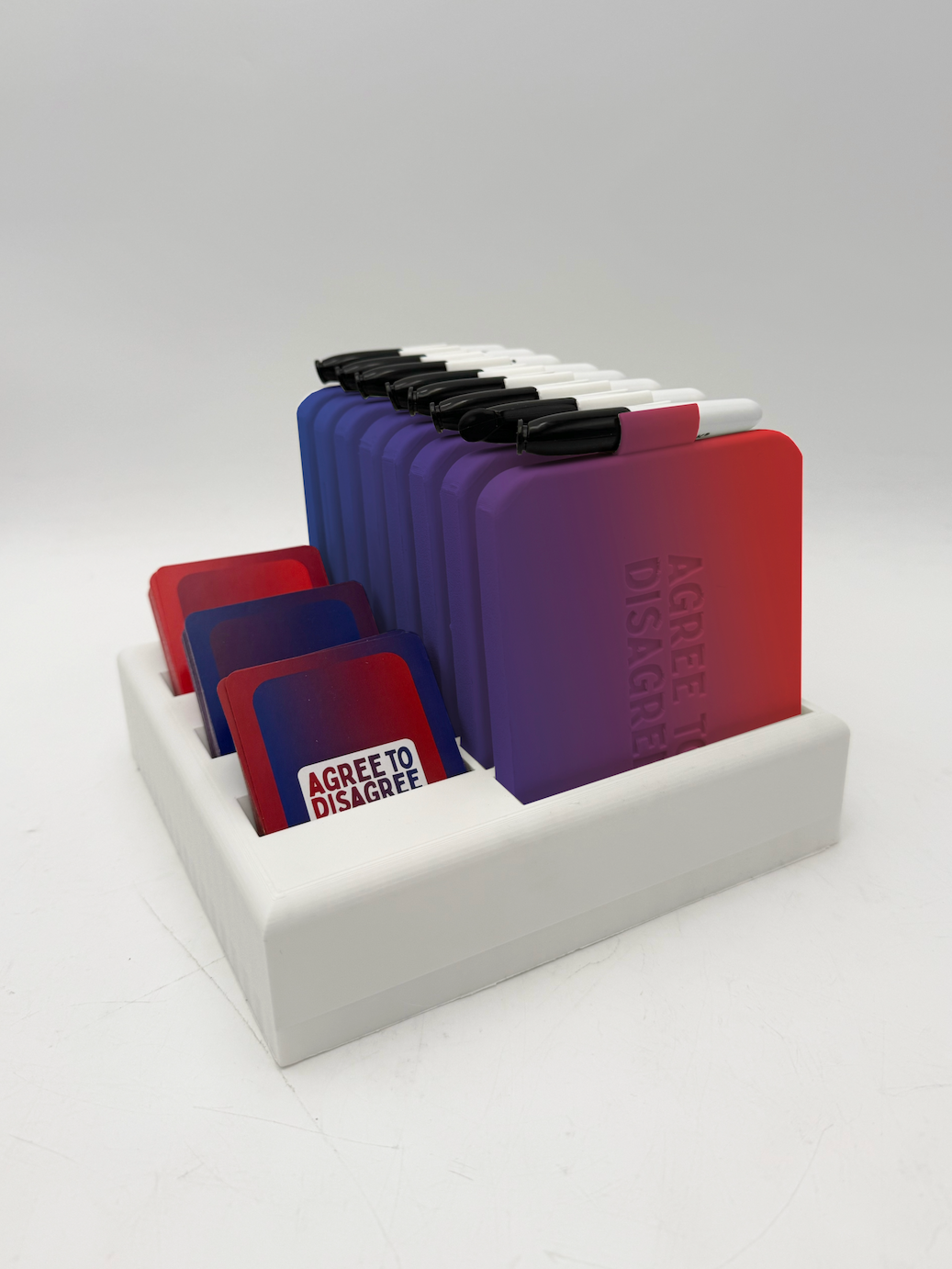
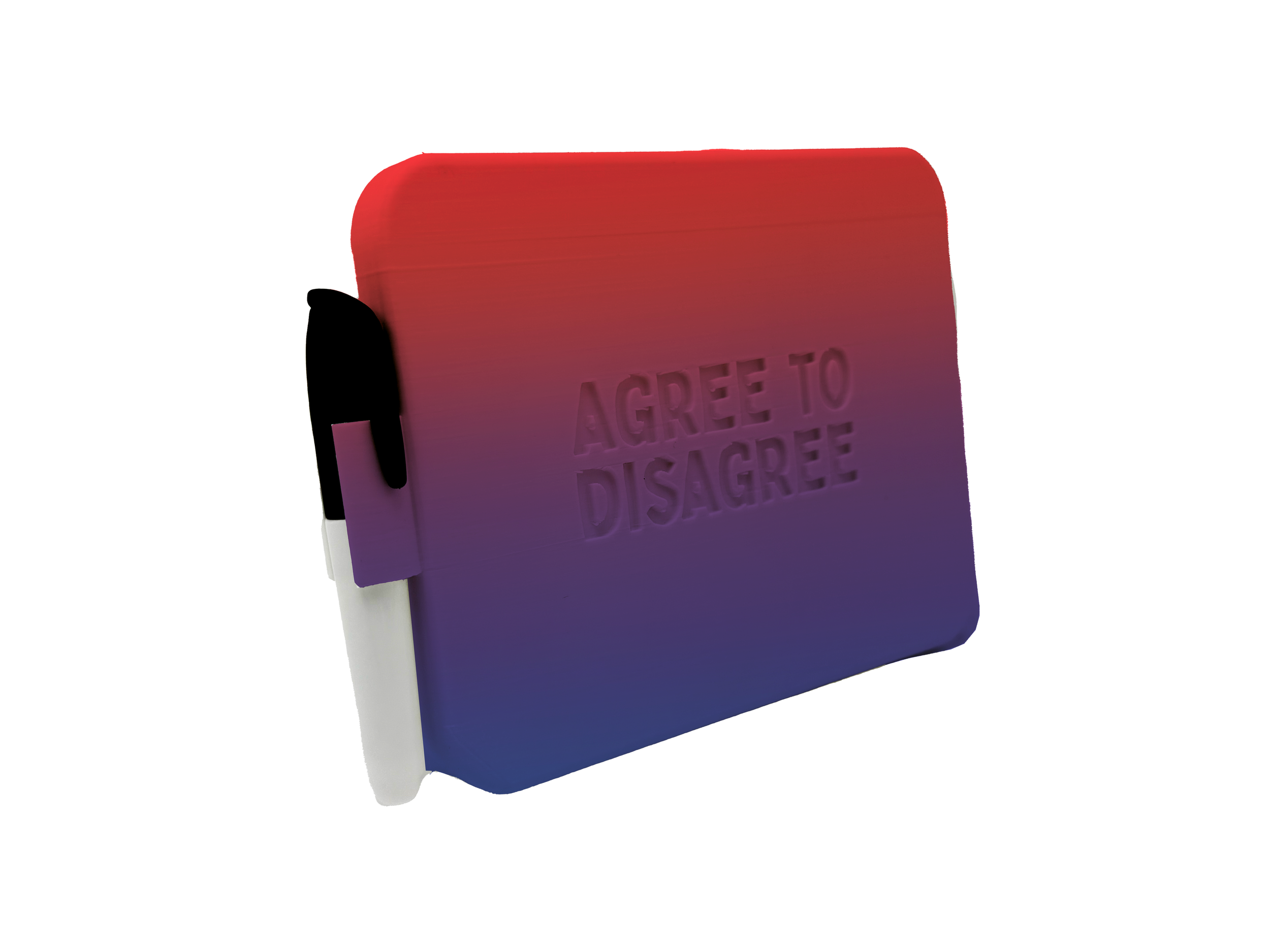
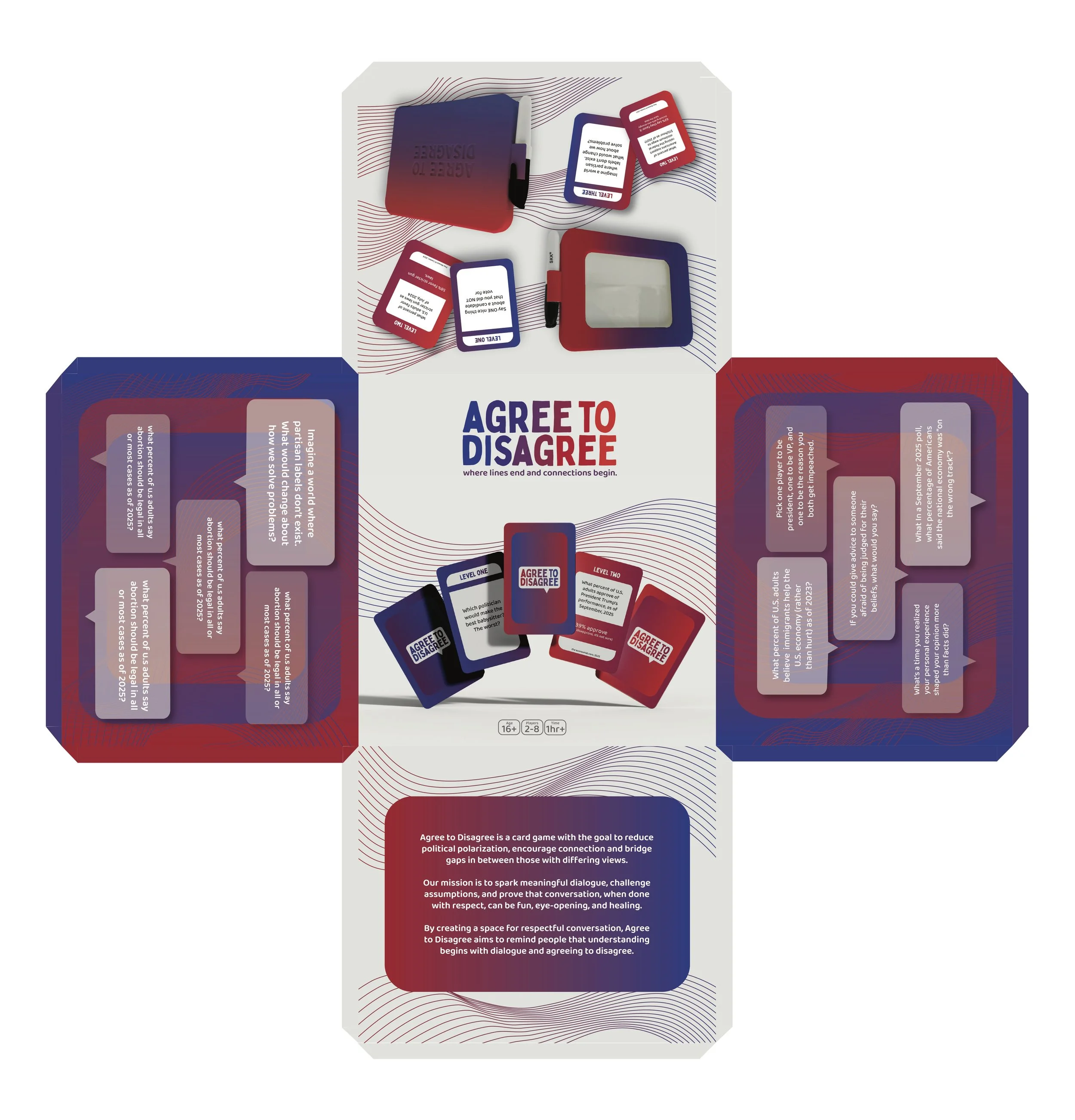
Agree to Disagree is a card game with the goal to reduce political polarization and encourage connection and bridging gaps between those with differing views. As the U.S becomes increasingly polarized, the most dangerous threat to us is the divide. Our mission is to spark meaningful dialogue, challenge assumptions, and prove that conversation, when done with respect, can be fun, eye-opening, and healing. By creating a space for respectful conversation, Agree to Disagree aims to remind people that understanding begins with dialogue.

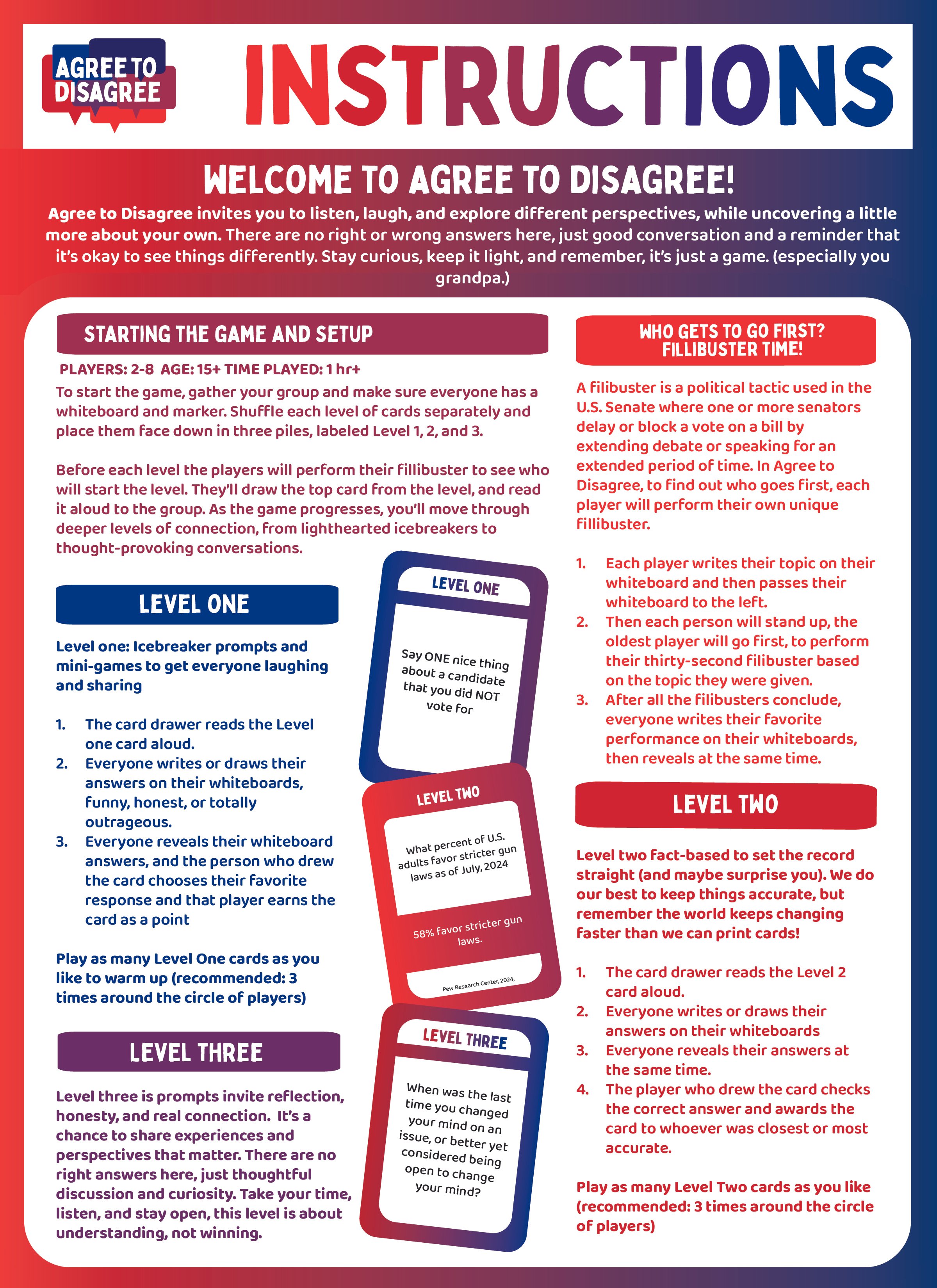
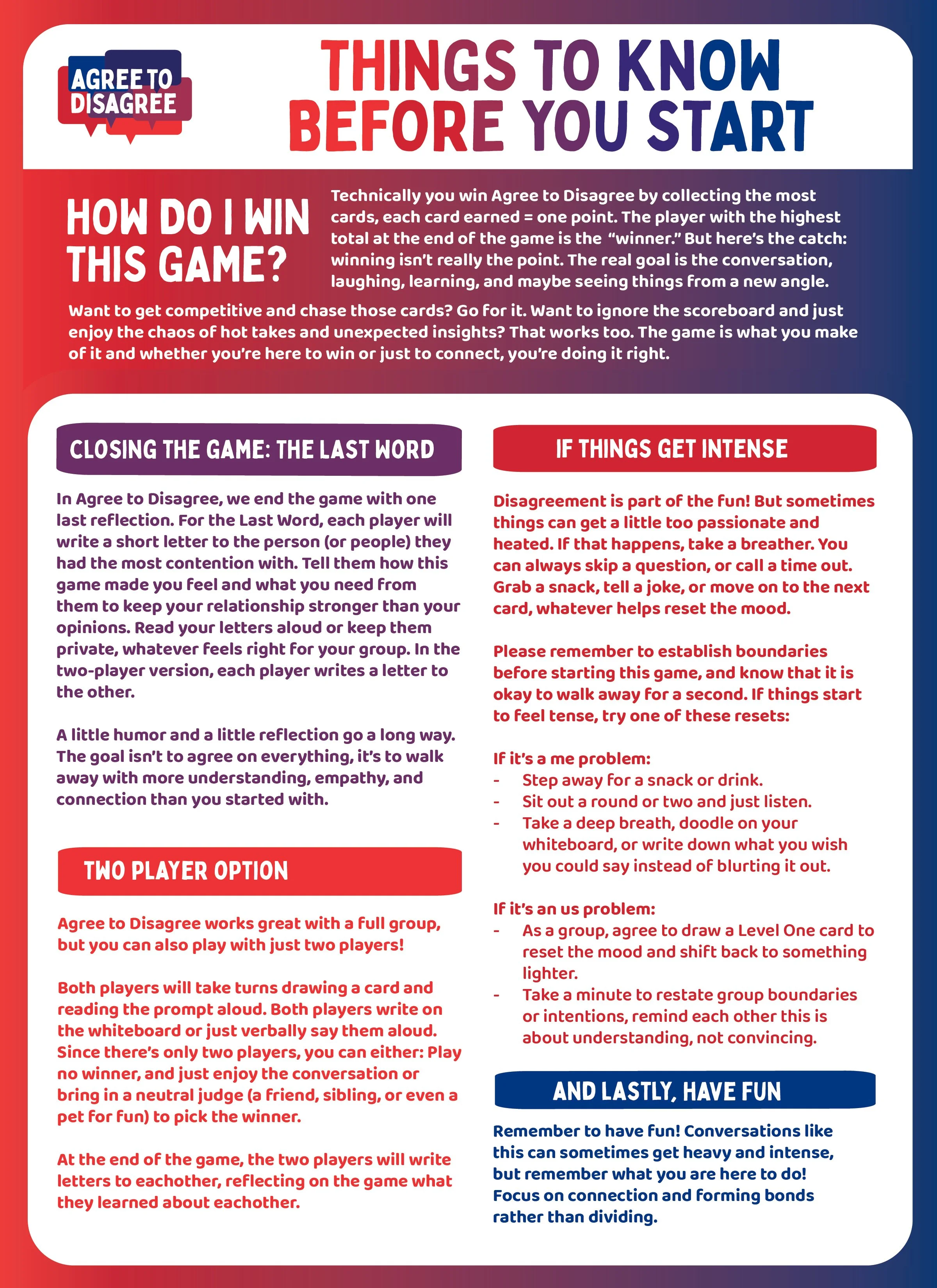

Ideation and Research


In developing this concept, the first step was identifying the root of the problem: not disagreement itself, but the way disagreement has become emotionally charged, isolating, and polarized. My research showed that polarization thrives when people feel divided into rigid “us vs. them” groups, which shuts down curiosity and turns conversation into competition.
To meaningfully reduce polarization, the goal isn’t to erase differences, but to create a shared space where opposing perspectives can coexist without hostility. Studies on social psychology and contact theory highlight that when individuals engage in structured interactions, they are more open to understanding viewpoints outside their own. Additionally, research on game design emphasizes the importance of psychological safety, people are more willing to share, listen, and reconsider when the environment feels low stakes and collaborative rather than confrontational.
I also found that humor plays a powerful role in lowering defensiveness. Scholars note that laughter can reduce perceived threat, soften political tension, and make difficult topics feel accessible rather than intimidating. Humor signals playfulness rather than judgment, which helps shift conversations away from “winning” and toward connecting. By integrating lighthearted challenges, playful prompts, and moments of levity, the design encourages participants to stay engaged even when topics are sensitive. Altogether, the concept grew from the idea that combating polarization isn’t about forcing agreement, it’s about designing interactions that spark empathy, curiosity, and genuine dialogue.

